


Introduction: The Silent Drain on Global Food Systems
Every year, the global agriculture sector achieves extraordinary feats of productivity. Driven by breakthroughs in genetics, precision farming, and crop protection, farmers around the world coax record-breaking yields from the soil. Yet, a profoundly troubling paradox persists: nearly one-third of all food produced globally is lost or wasted before it ever reaches a consumer’s plate. According to the Food and Agriculture Organization (FAO), post-harvest losses represent not only a massive humanitarian failure but an economic drain of over $1 trillion annually.
This loss does not occur in a vacuum. It is the direct result of systemic inefficiencies in the global agri-food supply chain. Perishable crops—such as fruits, vegetables, dairy, and proteins—face a perilous journey from farm gates to retail shelves. Temperature spikes, transit delays, improper handling, and a chronic lack of operational visibility turn highly valuable harvests into waste within hours.
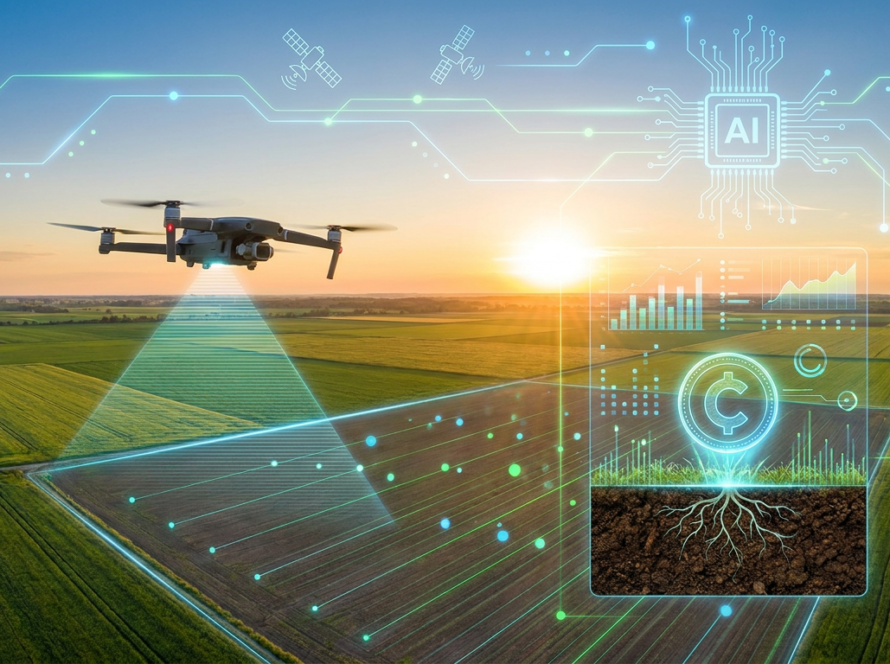
To solve this crisis, the agricultural sector is undergoing a rapid digital transformation. The integration of Artificial Intelligence (AI) and real-time Internet of Things (IoT) logistics is redefining how food moves across the globe. By replacing blind transit routes with cognitive, self-tracking, and predictive logistics networks, agribusinesses are transforming supply chains from passive transport pipelines into dynamic, responsive ecosystems that preserve food value, protect margins, and bolster global food security.
1. Market and Field Realities: The Friction in Post-Harvest Logistics
For decades, post-harvest logistics operated under a “ship and pray” model. Once a container of fresh produce left the packing facility, managers had virtually zero visibility into its condition until it arrived at its destination. If a refrigeration unit failed mid-transit, or if a vessel was delayed at a port for three days, the damage was only discovered upon opening the container doors. By then, the entire shipment was often fit only for the landfill.
Agribusinesses operate on razor-thin margins and face a complex web of market and field realities:
- Perishability and Shelf-Life Expiration: Unlike dry goods, agricultural commodities have a ticking physiological clock. Respiration rates, ethylene production, and moisture loss dictate a crop’s remaining market life. A deviation of just two degrees Celsius can slash the shelf life of fresh berries or leafy greens by 50%.
- Infrastructure Disparities: While developed countries battle operational inefficiencies and driver shortages, emerging agricultural economies face severe structural deficits. Inadequate cold storage, unpaved roads, and unreliable power grids mean that post-harvest losses in regions like Sub-Saharan Africa and Southeast Asia can exceed 40% for highly perishable products.
- Complex, Multi-Modal Routes: Intercontinental food shipments move via trucks, trains, cargo ships, and planes. Each transition point—from farm transport to cold storage facility, customs checkpoint, and distribution center—represents a point of failure where temperature stability can be compromised.
- Resource Constraints and Climate Volatility: Rising fuel costs make inefficient routing economically unsustainable. Concurrently, shifting weather patterns and extreme weather events introduce unpredictable delays at shipping hubs, amplifying the risk of spoilage.
For farmers, these losses represent an complete waste of labor, water, fertilizer, and capital. For consumers, it drives up food prices and reduces access to nutritious fresh foods. The financial and emotional toll on the agricultural community highlights the urgent need for a shift from reactive problem-solving to proactive, data-driven prevention.
2. The Technological Engine: IoT, AI, and Predictive Cold Chains
The solution to these age-old logistics challenges lies in a powerful combination of hardware and software: the convergence of IoT sensors and AI-driven predictive modeling. Together, they create a “cognitive supply chain” where shipments actively monitor themselves and report their status in real time.
The Role of Multi-Sensor IoT Devices
Modern IoT devices are no longer mere temperature loggers; they are sophisticated, cellular-connected telemetry units. Placed directly inside crates or shipping containers, these compact sensors continuously measure and transmit key environmental metrics:
- Temperature and Humidity: Ensuring the preservation of the cold chain.
- Ethylene Gas Levels: Ethylene is a natural plant hormone that triggers ripening. Detecting spikes in ethylene allows logistics managers to identify early-stage ripening before physical signs appear.
- Carbon Dioxide (CO₂) and Oxygen (O₂): Critical for controlled-atmosphere containers carrying high-value fruits like avocados or bananas.
- Shock, Tilt, and Vibration: Monitoring physical impacts that cause bruising, which accelerates bacterial decay.
- GPS and Geofencing: Providing exact location data to predict arrival times and alert managers of delays.
AI and Machine Learning: Turning Telemetry into Action
Raw data alone does not solve supply chain challenges; in fact, stream after stream of uncontextualized data can overwhelm logistics teams. This is where AI steps in. machine learning algorithms sit on top of the IoT data pipelines, contextualizing real-time telemetry with external variables such as weather forecasts, port congestion metrics, and historic shipping data.
Instead of merely alerting a manager that a container temperature is high, an AI-enabled system calculates the remaining shelf life of the crop based on cumulative thermal exposure. If the system predicts that a shipment of avocados will spoil before reaching its original destination because of a port strike, the platform automatically recommends re-routing the shipment to a closer, alternative buyer, saving the economic value of the cargo.
“With AI, we are shifting from tracking history to predicting the future. We no longer ask ‘Where did the cold chain fail?’ but rather ‘Where is it likely to fail, and how do we prevent it right now?'”
3. Case in Point: Real-World Interventions in Action
To understand how these technologies work in practice, let us examine two illustrative, region-neutral scenarios that demonstrate the tangible return on investment of smart logistics.
Scenario A: The Cross-Border Soft Fruit Corridor
A major exporter of fresh strawberries routinely faced a 15% rejection rate due to mold and bruising during a 1,200-mile overland transit route to premium retailers. The company deployed cellular IoT smart tags inside every third pallet, linked to an AI logistics platform.
During a routine transit, a truck met with severe traffic delays at a border crossing under 38°C (100°F) ambient heat. Concurrently, the truck’s auxiliary refrigeration unit began to underperform. The IoT sensors detected a slow, continuous rise in internal package temperature and an increase in relative humidity.
The AI system simulated the fruit’s ripening curve and flagged that the strawberries would arrive with less than two days of retail shelf life remaining. It immediately alerted the logistics coordinator, who rerouted the truck to a cold-processing plant just 30 miles off the highway, where the strawberries were instantly diverted into juice and jam production. While the fresh-market premium was lost, the exporter recovered 70% of the crop’s value, avoiding a total loss and saving the high costs associated with disposing of spoiled cargo.
Scenario B: Optimizing Maritime Cold Chains for Tropical Exports
An agricultural cooperative exporting organic bananas across the ocean implemented controlled-atmosphere IoT tracking. During a transoceanic voyage, a container’s nitrogen gas injection system malfunctioned, causing oxygen levels to rise—a condition that triggers rapid, premature ripening during transit.
The automated IoT alert bypassed the ship’s busy crew and went straight to the shipping line’s technical operations center via satellite. Operations specialists guided the ship’s engineer to the exact container to replace a faulty valve within six hours of the initial alert. The bananas remained in their dormant state throughout the rest of the voyage, arriving at the destination port in peak condition. This single intervention saved a shipment valued at over $120,000.
4. Business Models, ROI, and Agri-Finance Dynamics
The business case for integrating AI and IoT into agricultural logistics extends far beyond reducing waste; it fundamentally improves treasury management, capital allocation, and creditworthiness for agribusinesses.
The Rise of Hardware-as-a-Service (HaaS)
Historically, the high upfront cost of IoT sensors and enterprise software licenses prevented small and medium-sized agribusinesses from adopting these technologies. Today, tech providers have shifted toward a **Hardware-as-a-Service (HaaS)** model. Under this paradigm, agri-exporters do not buy expensive sensors; instead, they pay a flat subscription fee per shipment or per container. The technology provider handles sensor recovery, battery re-charging, and cloud platform maintenance. This shifts capital expenditure (CapEx) to predictable operational expenditure (OpEx), lowering the barrier to entry.
Unlocking Agri-Finance and Trade Credit
Post-harvest loss is a major driver of financial risk in agricultural lending. Banks and trade finance institutions are traditionally hesitant to extend low-interest credit to exporters of highly perishable crops because of the threat of total cargo loss.
However, when an agribusiness uses real-time monitoring and AI predictive analytics, the risk profile changes dramatically:
- Lower Insurance Premiums: Marine and cargo insurers are increasingly offering discounted premium rates to exporters who utilize verified cargo-tracking systems, as these systems directly reduce the frequency and severity of insurance claims.
- Working Capital Optimization: Armed with real-time ETA data and quality assurance telemetry, banks can confidently offer supply chain financing, advancing funds to farmers the moment their high-quality goods are loaded onto a smart container, rather than waiting for final delivery.
- Incentivizing Investment: Agri-tech startups building these platforms are attracting significant venture capital. Investors recognize that addressing mid-stream supply chain inefficiencies offers a faster, more reliable return on investment than attempting to change biological crop growth cycles.
Connecting Global Innovation: AgriNext 2027
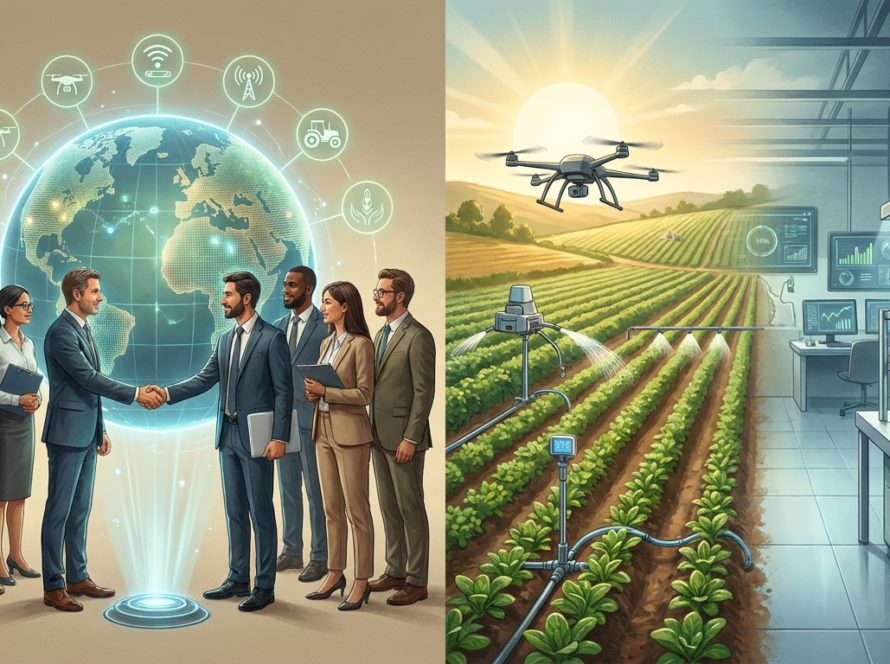
The challenges of post-harvest waste and the digital solutions redesigning agricultural logistics are prime examples of the innovations discussed on the global stage. For industry players looking to explore, invest in, or show off these game-changing technologies, the AgriNext Awards & Conference – USA is an essential event.
Organized by Next Business Media, the 4th Edition of the AgriNext Awards & Conference 2027 will take place on 9 April 2027 in Las Vegas, USA, at the prestigious JW Marriott Las Vegas Resort & Spa. This global platform brings together industry leaders, agribusinesses, researchers, policymakers, and green-tech investors to map out the future of food systems.
AgriNext 2027 highlights breakthroughs in AI in agriculture, IoT logistics, precision cultivation, vertical farming, and agri-finance. Outstanding innovators who are leading the charge against post-harvest waste can receive recognition under specialized award categories celebrating excellence in digital agriculture, climate-resilient systems, and robotics.
Whether you want to build strategic partnerships or showcase your latest technologies, consider taking action today:
- Register as a delegate to attend high-level panel discussions and networking sessions.
- Apply for awards to gain global recognition for your team’s contributions to agricultural efficiency.
- Become a sponsor or exhibitor to put your solutions in front of major decision-makers and venture capitalists.
- Submit your speaking proposal to share your insights on post-harvest waste mitigation and smart logistics on our main stage.
5. Policy, Regulation, and the Sustainability Mandate
The adoption of smart logistics is no longer just a voluntary strategy to boost profits; it is increasingly a regulatory necessity. Governments worldwide are tightening safety, transparency, and waste reduction legislation to address environmental and public health concerns.
Food Safety and Traceability Mandates
Modern regulatory updates, such as Section 204 of the U.S. FDA’s Food Safety Modernization Act (FSMA), demand end-to-end traceability for high-risk foods. If a foodborne illness outbreak occurs, supply chain players must be able to trace the product back to its origin within hours, rather than weeks. Smart IoT tracking provides an unalterable digital ledger of a product’s journey. This makes it easy to prove compliance and isolate affected batches quickly, preventing broad, market-wide recalls that waste tons of safe food.
Decarbonization and Scope 3 Emissions
Food recovery is climate action. When food rots in transit, it releases methane—a greenhouse gas far more potent than carbon dioxide. Moreover, all the emissions generated during cultivation, packaging, and transport are instantly wasted.
Global corporations are under intense pressure to report and reduce their **Scope 3 emissions** (indirect emissions within their value chain). By using AI-driven routing to reduce spoilage, corporate agribusinesses can directly demonstrate massive reductions in waste-related carbon footprints. This alignment of economic incentives and regulatory compliance is driving the rapid adoption of smart logistics technologies across Europe, North America, and key global exporting hubs.
Actionable Insights: Recommendations for Key Stakeholders
To successfully integrate AI and real-time IoT logistics, different players in the agricultural ecosystem must take targeted, coordinated action:
- For Agribusiness Managers & Exporters: Adopt a “crawl, walk, run” deployment strategy. Begin by equipping your most perishable, highest-margin export routes with HaaS IoT sensors. Use the initial data to pinpoint your primary black boxes—whether they are port delays, unreliable third-party carriers, or poor precooling practices—before scaling to your entire fleet.
- For Agri-Tech Startups & Developers: Prioritize hardware interoperability. Agribusinesses do not want another siloed software app. Design your AI logistics platforms to integrate smoothly with existing Enterprise Resource Planning (ERP) databases, warehouse management software, and shipping line APIs.
- For Investors & Venture Capitalists: Focus capital on midstream agricultural logistics technology. While crop genetics and farm robotics receive immense attention, the “middle mile” of the food supply chain is ripe for rapid optimization, offering quick development cycles and highly predictable patterns of return.
- For Policymakers and Extension Officers: Create regional “smart logistics hubs.” Provide co-investment grants or tax incentives for farming cooperatives that build shared cold-storage facilities equipped with IoT networks. Upgrading public port infrastructure with automated customs clearance can also clear transport bottlenecks and keep food moving.
The Horizon of Automated Agri-Logistics
The future of post-harvest logistics points toward a fully autonomous, self-healing supply chain. As AI systems continue to mature, they will do more than just notify human managers of food transit disruptions. Emerging machine-to-machine (M2M) communications will enable AI platforms to directly adjust container environments, schedule inspections, and trade cargo ownership automatically on the water to prevent waste.
By transforming agricultural logistics from an unpredictable journey into an optimized science, the global food industry can build resilient supply chains capable of feeding a growing global population in the face of climate volatility. The integration of AI and real-time IoT is no longer a luxury for key markets; it is the vital foundation of tomorrow’s global food security.
 Reach us on WhatsApp