

Water is the lifeblood of agriculture, yet the global food production system faces an unprecedented structural paradox: we must produce 60% more food by 2050 to feed a growing population, while the freshwater resources required to sustain this yield are rapidly depleting. Agriculture already accounts for approximately 70% of global freshwater withdrawals, and in many arid and semi-arid production zones, this allocation is no longer ecologically or politically viable.
Historically, irrigation has relied on static calendar schedules or manual soil examinations—methods that are inherently imprecise and prone to either yield-limiting dry-backs or nutrient-leaching overwatering. Today, a paradigm shift is underway. The convergence of the Internet of Things (IoT), localized telemetry, and predictive cloud-based analytics is transforming water management from an observational craft into a hyper-precise predictive science. By transitioning to smart irrigation, global agribusinesses are discovering that saving water does not require sacrificing yield; rather, optimizing water allocation directly enhances crop health, soil vitality, and bottom-line profitability.
—
Market and Field Realities: The Escalating Water Crunch in Modern Farming
Farmers operate on the front lines of climate volatility. Aquifers are dropping to critical levels worldwide, prompting regulatory agencies to impose strict volumetric caps on groundwater pumping. Simultaneously, rising energy tariffs mean that pumping water from deeper underground drives up operational costs, directly squeezing farm margins.
Beyond resource constraints, improper water application carries severe biological penalties. Overwatered crops suffer from root hypoxia, specialized pathogens (such as root rot and mildew), and localized nutrient leaching, where valuable nitrogen and phosphorus are washed past the root zone into local watersheds. On the other hand, under-irrigation induces severe drought stress, reducing vegetative growth, causing flower abortion, and severely degrading final crop quality.
“Modern irrigation is no longer just about delivering water to a field; it is about micro-managing the hydraulic dynamics of the soil-root-plant-atmosphere continuum in real time.”
To remain competitive, growers require systems that treat water as a variable, highly precious input. This shift is driving demand for advanced digital solutions that can assess spatial and temporal variability across thousands of hectares simultaneously, allowing for dynamically tailored irrigation strategies.
—
Technology and Innovation: The Core Engine of Smart Irrigation
The transformation of traditional irrigation infrastructure into an intelligent, closed-loop system relies on three interconnected layers of modern technology: edge-deployed IoT sensors, cloud-based predictive analytics, and automated delivery systems.
1. IoT Edge Technologies: Sensing the Soil and Canopy
Modern farm fields are increasingly peppered with a dense layer of environmental sensors connected via low-power wide-area networks, such as LoRaWAN or cellular IoT (NB-IoT/LTE-M). This sensor architecture includes:
- Multi-Depth Soil Moisture Probes: Using Frequency Domain Reflectometry (FDR) or Time Domain Reflectometry (TDR), these probes measure the volumetric water content at multiple depth profiles (e.g., 10cm, 30cm, 60cm, and 100cm). This allows growers to see not just if the topsoil is wet, but whether water is successfully penetrating the active root zone or draining wastefully beyond it.
- Canopy Extremity and Sap Flow Sensors: By mounting micro-tensiometers directly to trunk limbs or using thermal sensors to measure canopy temperature, growers can track actual plant transpiration and crop water stress index (CWSI) in real time.
- Micro-Climate Weather Stations: On-farm weather stations track local ambient temperature, relative humidity, wind speed, and solar radiation to calculate localized reference Evapotranspiration ($ET_0$) with extreme accuracy.
2. Predictive Cloud Analytics and Machine Learning
Raw sensor data alone can overwhelm field managers. The true value emerges when cloud platforms ingest this telemetry alongside high-resolution satellite imagery (using spectral bands like NDVI and NDWI) and hyperlocal weather forecasts.
Machine learning models process these datasets to calculate predictive water-demand curves. Instead of reacting to current dryness, these systems forecast exactly how much water a specific crop block will transpire over the next 48 to 72 hours, adjusting irrigation recommendations before the plants experience physiological stress.
3. Automation and Precision Delivery
The final component is the automation of field hardware. Through cloud-connected telemetry units, predictive software can directly instruct variable-rate irrigation (VRI) systems, linear or center pivot systems, and automated drip manifolds to open or close valves with granular precision. Water is delivered precisely where and when it is needed, compensating for soil type variations, slope, and canopy density across the field.
—
Practical Application: Smart Irrigation in Action
To understand how these technologies function under real-world pressure, let us look at two distinct scenarios highlighting the operational and financial impact of smart irrigation.
Case Scenario A: Broadacre Grain Production
In a large-scale, 5,000-hectare corn and soybean operation situated in an arid plains region, water is historically distributed via standard center pivots. By retrofitting these pivots with VRI technology, multi-depth soil probes, and predictive rain-forecast integration, the farm manager overhauled their irrigation schedule.
The predictive system identified that eastern clay-heavy zones retained water far longer than western sandy-loam zones. Rather than running the pivots at a uniform speed, the system automatically sped up the pivot over wet-retaining soil and slowed it down over high-drainage zones. When localized weather forecasts predicted a 90% chance of rain within 24 hours, the system paused scheduled irrigation cycles, allowing the soil profile to naturally capture the incoming rainfall. Over a single growing season, this integration reduced water and pumping-energy consumption by 22%, while dynamic water leveling boosted localized corn yields by 7% due to improved root oxygenation.
Case Scenario B: High-Value Permanent Crop Viticulture
A premium vineyard faced declining water allocations alongside rising summer heatwaves. Maintaining wine grape quality requires highly controlled water application; too much water dilutes grape sugars and compounds, while too much stress ruins the vintage.
The vineyard deployed sap-flow sensors directly on the vines coupled with micro-climate sensors. Using cloud-based deficit-irrigation analytics, the system scheduled targeted, high-frequency, low-volume drip applications directly to the root zones during critical growth stages. This precise moisture control optimized the sugar-to-acid ratio in the grapes. The orchard saved 35% of its total water allocation, minimized weed pressure between vine rows, and produced a premium-grade harvest that commanded higher wholesale pricing.
—
Financing and Business Models: Bridging the Capex Barrier
Historically, the primary obstacle preventing widespread adoption of precision agri-tech has been the steep upfront capital expenditure (CapEx). Buying hardware, installing field telemetries, and maintaining battery-operated hardware across vast expanses of rural land can challenge a farm’s immediate cash flow.
To overcome this barrier, agri-tech providers are embracing new business models. **Irrigation-as-a-Service (IaaS)** is rapidly gaining traction. Under this model, farmers do not buy any physical sensors, valves, or weather stations. Instead, a third-party technology provider installs, maintains, and manages the entire network, charging the farm a predictable annual or monthly subscription fee based on cultivated acreage. This shifts the financial burden from CapEx to operating expenses (OpEx), allowing farmers to realize immediate savings on water, energy, and labor that often exceed the service fee.
Furthermore, agricultural lenders and venture capital firms are recognizing the risk-mitigation value of smart irrigation. Farms utilizing predictive water management are statistically less vulnerable to drought-induced crop failures, making them lower-risk profiles for crop insurance and farm credit lines. Green bonds, government-backed conservation grants, and carbon/water credit incentives are also increasingly subsidizing these smart investments, helping farmers transition to modern digital infrastructure.
Focus Event: Connecting Innovation and Capital
As these new financing models, sustainable investment structures, and cutting-edge automation solutions emerge, the global agriculture industry requires a collaborative space to define the path forward. The AgriNext Awards & Conference – Las Vegas, USA (4th Edition) serves as this premier global platform where agriculture meets innovation.
Taking place on 9 April 2027 at the luxurious JW Marriott Las Vegas Resort & Spa, this highly anticipated event is organized by Next Business Media. AgriNext 2027 brings together industry leaders, scaleups, investors, researchers, policymakers, and agribusinesses to discuss key developments in IoT in agriculture, precision farming, vertical farming, digital agriculture, and innovative agri-finance models. The conference features dedicated networking sessions, keynotes, panel discussions, and exhibitions designed to accelerate global food system resilience.
To join the conversation and showcase your innovation: Learn more about AgriNext Awards & Conference – USA. Whether your objective is to register as a delegate, apply for prestigious awards recognizing excellence in agri-tech, become a sponsor or exhibitor, or submit your speaking proposal, AgriNext 2027 is the ideal stage to position your brand at the forefront of agricultural evolution.
—
Policy, Regulation, and the ESG Imperative
A growing driver for smart irrigation is the shifting global regulatory environment. Governments from the Americas to Europe and Asia are instituting stringent compliance measures for groundwater extraction. In California, the Sustainable Groundwater Management Act (SGMA) has placed strict baselines on water banking and usage, while European farming directives increasingly link rural subsidies directly to verified ecological and water conservation metrics.
Smart irrigation platforms provide a secure, auditable record of water use. By digitizing water records, agribusinesses can effortlessly generate Environmental, Social, and Governance (ESG) compliance reports. This transparent data tracking is not just about avoiding regulatory penalties; it is a vital calling card for multi-national consumer packaged goods (CPG) brands looking to source agricultural raw materials from verified sustainable, low-water-footprint supply chains.
Additionally, optimizing water application reduces soil runoff, preventing nitrogen and synthetic fertilizers from contaminating local rivers and coastal ecosystems. This preserves vital biodiversity while keeping valuable crop nutrition securely inside the soil profile where it belongs.
—
Actionable Strategies for Key Stakeholders
To successfully integrate smart irrigation technologies across the global food value chain, major industry participants must take proactive, targeted actions:
-
For Farm Owners & Agribusiness Managers:
Start with a spatial and soil audit of your operation. Do not rush to automate your entire acreage at once. Instead, identify your highest-value or most water-vulnerable blocks and deploy a pilot project utilizing soil moisture probes and telemetry. Measure the baseline water savings and yield improvements over a single cycle to prove the local return on investment (ROI) before scaling. -
For Agri-Tech Startups & Innovators:
Prioritize interoperability and ease of use. Farmland is highly diverse, and growers are fatigued by closed-ecosystem platforms that cannot communicate with their existing pumps, valves, or tractors. Build software utilizing open APIs and standard communication protocols (like ISOBUS and open-source telemetry) to ensure smooth integration with legacy hardware. -
For Investors & Venture Funds:
Look past pure hardware plays to target companies offering end-to-end cloud platforms, predictive software integration, and subscription-based “X-as-a-Service” models. Prioritize startups that effectively layer predictive meteorological forecasts with localized agronomic models, as these provide the most defensive technological advantages. -
For Government Agencies & Extension Officers:
Create targeted financial incentive structures such as tax rebates, technological grants, or expedited permitting for farms adopting certified IoT water conservation devices. Support public-private partnerships that establish community mesh-networks (such as regional LoRaWAN gateways) to provide rural growers with low-cost connectivity.
—
Looking to the Horizon
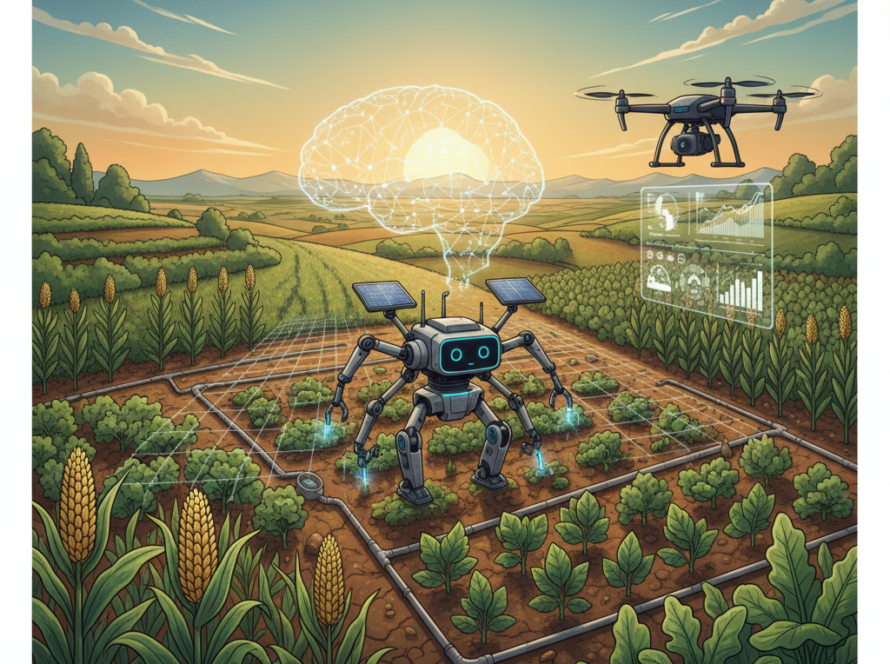
The future of digital agriculture points toward a fully closed-loop, autonomous farm ecosystem, where field sensors, localized weather intelligence, and robotic irrigation networks work in tandem without requiring manual programming. As machine learning algorithms become increasingly sophisticated, these systems will not only optimize water application, but will simultaneously calculate specific fertigation schedules (applying liquid fertilizers precisely mixed with irrigation water), adjusting dynamically to real-time plant growth stages and changing atmospheric conditions. By adopting these predictive, telemetry-driven technologies, the global agriculture sector can secure a highly productive, climate-resilient future—preserving the world’s most precious resources while sustainably scaling production to feed the global population.

 Reach us on WhatsApp