


Controlled Environment Agriculture (CEA) was once heralded as the absolute future of food production. The vision of ultra-local, pesticide-free, high-yield vertical farms operating inside urban warehouses captivated venture capitalists, urban planners, and environmentalists alike. By stacking growing trays vertically and using light-emitting diodes (LEDs) to simulate sunlight, early pioneers promised to decouple food security from climate limitations and geographic constraints.
However, the industry recently underwent a sobering reality check. A wave of closures, restructurings, and high-profile bankruptcies exposed a critical vulnerability: the gap between biological viability and economic profitability. Many first-generation facilities operated more like labor-intensive warehouses than optimized biological factories. High capital expenditure (CapEx), soaring energy costs, and reliance on manual labor for seeding, transplanting, and packaging squeezed margins, proving that scaling a vertical farm requires much more than just stacked shelves and red-and-blue lights.
Today, the industry is entering its second major era—CEA 2.0. This evolution is driven by the convergence of robotics, artificial intelligence, and deep-tech biological engineering. By replacing manual workflows with intelligent automation and utilizing machine learning to constantly optimize climate parameters, commercial vertical farming is systematically converting from a high-stakes gamble into a predictable, highly profitable, and investable asset class.
—
1. Market and Field Realities: The Profitability Hurdle in CEA
To understand why deep-tech integration is no longer optional, one must look at the strict economic realities that govern indoor cultivation. The viability of a vertical farm is determined by its unit economics—specifically, the cost to produce a single head of lettuce, a punnet of strawberries, or a kilogram of culinary herbs versus its wholesale market value.
Traditional field agriculture relies heavily on the free resources of nature: sunlight, rain, and soil. In contrast, a CEA facility must synthesize and control every single environmental coordinate. This introduces three core operational challenges:
- Energy Intensity: Lighting and HVAC (Heating, Ventilation, and Air Conditioning) systems are the lifeblood of vertical farms. Maintaining optimal temperature, humidity, and airflow while running high-intensity LED arrays 16 to 18 hours a day creates massive electrical overheads. When global energy prices fluctuate, unhedged vertical farms face immediate financial exposure.
- Labor Bottlenecks: Despite the futuristic imagery of cleanrooms and digital dashboards, many vertical farms remain surprisingly manual. Tasks such as crop inspection, cleaning growing trays, transplanting Delicate seedlings from germination plugs to main channels, and harvesting still require extensive human intervention. In high-income urban centers where these farms are situated, labor cost is a primary margin-killer.
- Crop Diversity Bottlenecks: Because of the high cost of energy and capital amortization, vertical farms have historically been restricted to fast-growing, high-water-content crops like leafy greens and microgreens. High-calorie staplers (such as grains) and heavier fruiting crops (like dwarf tomatoes or bush berries) remain economically challenging to scale without substantial technological intervention.
For CEA to compete with traditional field agriculture and greenhouse operations, operators must achieve two things: a drastic reduction in cost-per-kilogram of output and a dramatic increase in yield consistency. This is where physical robotics and digital deep tech step in.
—
2. Technology and Innovation: The Deep Tech Stack in Vertical Farming
The transformation of vertical farming from risky agricultural real estate to highly efficient bio-manufacturing is underpinned by a sophisticated stack of hardware and software solutions. These systems move beyond simple automation to enable a continuous loop of sensing, analysis, decision-making, and physical execution.
Robotic Handling and End-Effectors
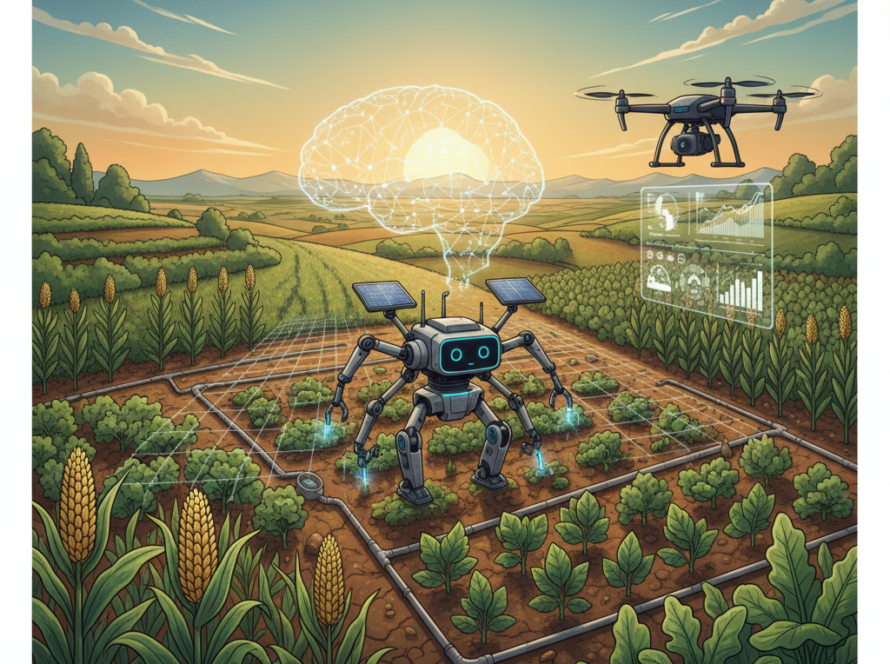
In traditional manufacturing, robots handle rigid materials like steel or plastic. In agriculture, robots must interact with living, delicate, and highly variable organisms. Modern vertical farms utilize specialized robotic arms equipped with soft end-effectors—grippers that use air pressure or biomimetic designs to gently transplant young seedlings without damaging root structures or tender stems.
Automated Guided Vehicles (AGVs) and gantry-style shuttle systems carry entire growing trays from one station to the next. These vehicles eliminate the need for workers to walk up and down aisles, climb scaffolding, or manually lift heavy grow channels. Instead, the plants travel to a centralized workstation where specialized machinery handles trimming, cleaning, and packaging.
Computer Vision and Hyper-Spectral Imaging
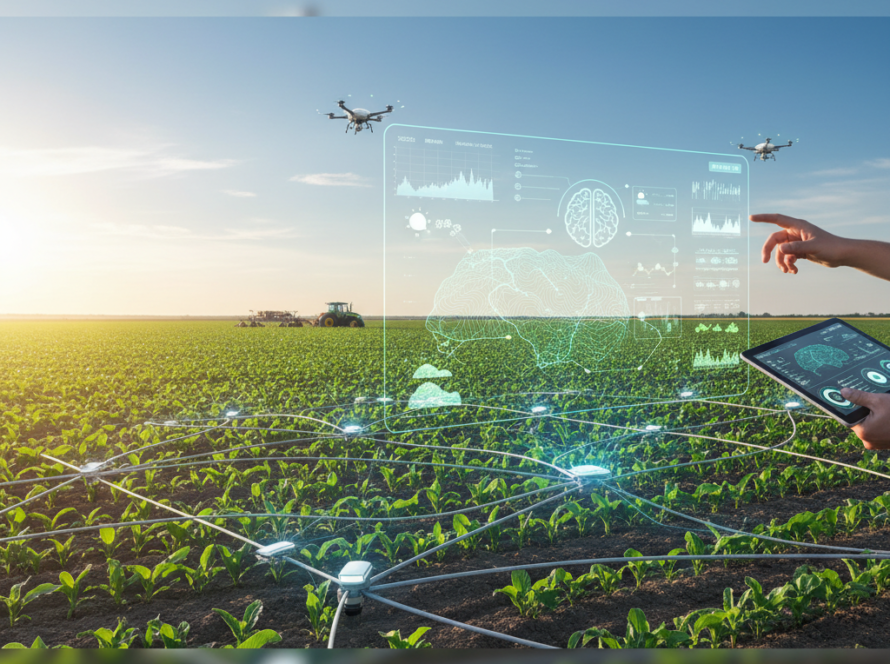
Instead of relying on human growers to walk through facilities checking for diseases, nutrient deficiencies, or pests, modern CEA facilities employ computer vision towers and drone-mounted cameras. By capturing images across multiple spectral bands (infrared, ultraviolet, and visible light), these systems detect signs of plant stress days before they become visible to the human eye.
Machine learning models analyze these images in real time to measure chlorophyll fluorescence, leaf area index, and growth rates. If a crop tray shows signs of heat stress or nitrogen deficiency, the central operating system can instantly adjust the micro-climate or nutrient recipe for that specific zone, preventing localized crop loss and maintaining ultra-consistent crop quality.
“Deep tech is shifting the role of the modern grower. Instead of performing repetitive physical labor, agricultural specialists are now data analysts, optimizing digital crop recipes to maximize photosynthetic efficiency and flavor profiles.”
AI-Driven Closed-Loop Climate Control
A vertical farm’s environment is highly dynamic. Plants constantly transpire, releasing water vapor that shifts local humidity zones. Traditional HVAC systems struggle with these localized shifts, leading to stale air pockets that encourage mold or tip-burn.
AI-driven climate controllers integrate thousands of distributed Internet of Things (IoT) sensors to dynamically map the facility in three dimensions. By predicting thermodynamic trends, these systems adjust fan speeds, dehumidifier cycles, and LED dimmers to ensure that every individual leaf experiences the ideal vapor pressure deficit (VPD). This exactitude minimizes energy waste by running cooling and lighting systems only when the plants can actively utilize them for photosynthesis.
—
3. Case Example: Transitioning from Manual to Fully Automated Cultivation
To understand the tangible financial impact of these technologies, consider an illustrative, region-neutral comparison between two commercial vertical farming models operating a 5,000-square-meter facility producing specialty loose-leaf greens.
Scenario A: The Semi-Automated Facility
In this facility, lighting and irrigation are timed automatically, but transplanting, pest scouting, and harvesting are executed manually. Workers utilize scissors to harvest the greens directly from the vertical racks and transport them on rolling carts to a manual sorting station.
- Labor Force: 18 full-time warehouse operatives.
- Harvest Loss: 8% due to handling damage, uneven growth, and delayed pest identification.
- Operational Margin: ~12%, leaving the facility highly vulnerable to energy price hikes or wage increases.
Scenario B: The Deep-Tech Integrated Facility
This facility implements automated gantry systems, smart shuttle movement, and cloud-based computer vision. The plants germinate in a dedicated automated room. When ready, overhead gantries move the trays to growing racks where spectral cameras monitor daily growth. Upon reaching peak biomass, shuttles bring the trays down to an automated cutting and packaging line.
- Labor Force: 4 technical operators managing software, hardware maintenance, and food safety protocols.
- Harvest Loss: Under 1.5%. Crop health data collected by spectral cameras allows for early, automated intervention, resulting in uniform, prime-grade yields.
- Operational Margin: ~38%. Despite high initial asset footprints, the drastic reduction in ongoing payroll and minimized raw material waste significantly lowers the break-even cost per kilogram.
This comparison demonstrates that the upfront capital expenditure of advanced robotics pays substantial dividends in the form of stabilized OpEx, reliable yield cycles, and superior unit economics, turning vertical farming from a volatile farming experiment into a predictable, factory-like process.
—
4. Business Models, Investment, and Agri-Finance
The early phase of CEA capital injection was dominated by high-risk venture capital seeking rapid, hockey-stick growth curves. However, agricultural infrastructure does not scale at the speed of software. Today, the investment community is applying far more rigorous due diligence, preferring project finance structures, infrastructure debt, and proven unit economics over speculative valuations.
Reframing the Financial Model
To attract long-term institutional capital, vertical farming companies are shifting away from owning the entire supply chain. Instead, they are developing capital-efficient business models:
- Farming-as-a-Service (FaaS): Technology providers license their automated growing platforms, software suites, and proprietary crop recipes to traditional food distributors, real estate operators, or supermarket chains. This allows the technology developer to maintain high margins through software licensing and component sales, while local operators handle physical cultivation.
- Securitized Offtake Agreements: Before building a facility, developers secure long-term, fixed-price supply contracts with major retail buyers or food service consolidators. These predictable revenue streams allow operators to secure low-interest infrastructure loans rather than diluting their equity with expensive venture funding.
- Co-location with Energy and Industrial Waste Heat: Smart developers are siting vertical farms adjacent to biogas plants, industrial manufacturing sites, or data centers. By tapping into excess waste heat and cheap local energy loops, vertical farms can slash their thermal management costs by up to 40%.
As the international agri-tech community works to scale these financing mechanisms, the integration of technology, investment networks, and policy continues to take center stage on global platforms.
For forward-thinking professionals working at this intersection, the upcoming AgriNext Awards & Conference – USA represents an invaluable venue for collaboration. Taking place on 9 April 2027 at the JW Marriott Las Vegas Resort & Spa in Las Vegas, USA, this premier event brings together agribusiness leaders, venture funds, and robotics innovators to explore commercial breakthroughs across vertical farming, AI integration, and agri-finance. Organised by Next Business Media, the conference offers essential opportunities to register as a delegate, apply for awards recognizing excellence in vertical farming innovation, or become a sponsor or exhibitor to showcase state-of-the-art technological solutions directly to active capital investors.
—
5. Policy, Regulation, and True Sustainability
While the economic argument for vertical farming is centered on yield optimization and resource efficiency, its long-term viability is also shaped by governmental policy, regional zoning regulations, and decarbonization targets.
Historically, vertical farms positioned themselves as champions of environmentalism by highlighting their ability to use up to 95% less water and 99% less land than open-field farms. While these statistics are accurate, critics quickly pointed out the significant carbon footprint associated with non-renewable electricity consumption. True sustainability, therefore, relies on harmonizing clean grid technology with regional municipal systems.
| Resource Vector | Traditional Farmland | Deep-Tech Vertical Farm | Policy & Regulatory Drivers |
|---|---|---|---|
| Water Use | High consumption; runoff issues | 95% reduction via closed condensation loops | Water scarcity mandates, drought subsidies |
| Land Footprint | Expansive; high land conversion impact | Negligible; scalable on brownfield/urban zones | Re-zoning incentives, urban renewal grants |
| Energy Source | Direct solar energy (free) | Artificial lighting; grid-dependent | Renewable integration tax credits, grid-balancing programs |
Governments worldwide are beginning to recognize vertical farming as a critical pillar of domestic food security, particularly in region-states with limited arable land or severe climatic conditions, such as the GCC region, island nations, and high-density Asian metropolises. Forward-looking regulatory policies in these regions are actively categorizing vertical farms as infrastructure projects, granting them access to agricultural fuel and electricity tariffs, low-cost state land, or sovereign wealth financing.
Furthermore, food safety certifications like GlobalG.A.P. and USDA Organic are adapting to soil-free farming. Because vertical farms operate in sterile environments, they do not require chemical pesticides or synthetic herbicides. This clean growing environment limits the threat of agricultural runoff and contamination risk, matching perfectly with strict national food safety initiatives.
—
6. Actionable Insights for Industry Leaders
How can different agricultural actors capitalize on the shift to deep-tech vertical farming? Below are practical steps designed to steer strategic growth:
For Farm Operators and Agribusiness Managers
- Prioritize Unit Cost Over Scaling Footprint: Avoid the temptation to expand your growing area until you have optimized your unit-level production margins. Focus first on micro-climate tuning and localized tray level automation.
- Retrofit with Targeted Computer Vision: You do not need to rebuild your farm from scratch to benefit from deep tech. Introducing camera networks and crop-monitoring software onto existing racks can instantly reduce harvest loss and lower manual inspection costs.
For Agtech Startups and Technology Providers
- Develop Interoperable Hardware API Standards: Modern indoor operators are fatigued by proprietary systems that don’t communicate with each other. Designing your robots, sensors, or LED fixtures to integrate easily with external Farm Management Systems (FMS) will accelerate your commercial adoption.
- Focus on Crop Diversity: Move your research and development beyond leafy greens. Designing automation and light recipes tailored specifically for berries, nursery starts, and active pharmaceutical ingredients (APIs) will open up high-margin revenue streams.
For Investors and Venture Funds
- De-Risk with Modular Diligence: Evaluate CEA startups based on physical hardware efficiency, labor reduction metrics, and energy hedging strategies rather than raw yield projections. Ensure that the business has secured credible, written offtake contracts before deploying capital.
- Explore Infrastructure Debt: Look to blend equity investing with debt financing models, using physical automated assets and real estate as collateral, which structures investments for long-term yield.
—
Looking to the Future of Global Agriculture
The maturation of Controlled Environment Agriculture is rewriting the relationship between geographic location, climate stability, and crop reliability. Vertical farming is no longer synonymous with high-risk financial speculation; instead, it is developing into a highly-engineered, predictable biological manufacturing process. As developers leverage advanced robotics, automate planting and harvesting cycles, and optimize energy through intelligent systems, vertical farming will establish itself as a primary pillar of global nutrition. By bridging the gap between biological potential and financial discipline, this tech-backed agriculture sector is positioned to safeguard our supply chains and build localized food certainty against an increasingly unpredictable global climate.
 Reach us on WhatsApp